

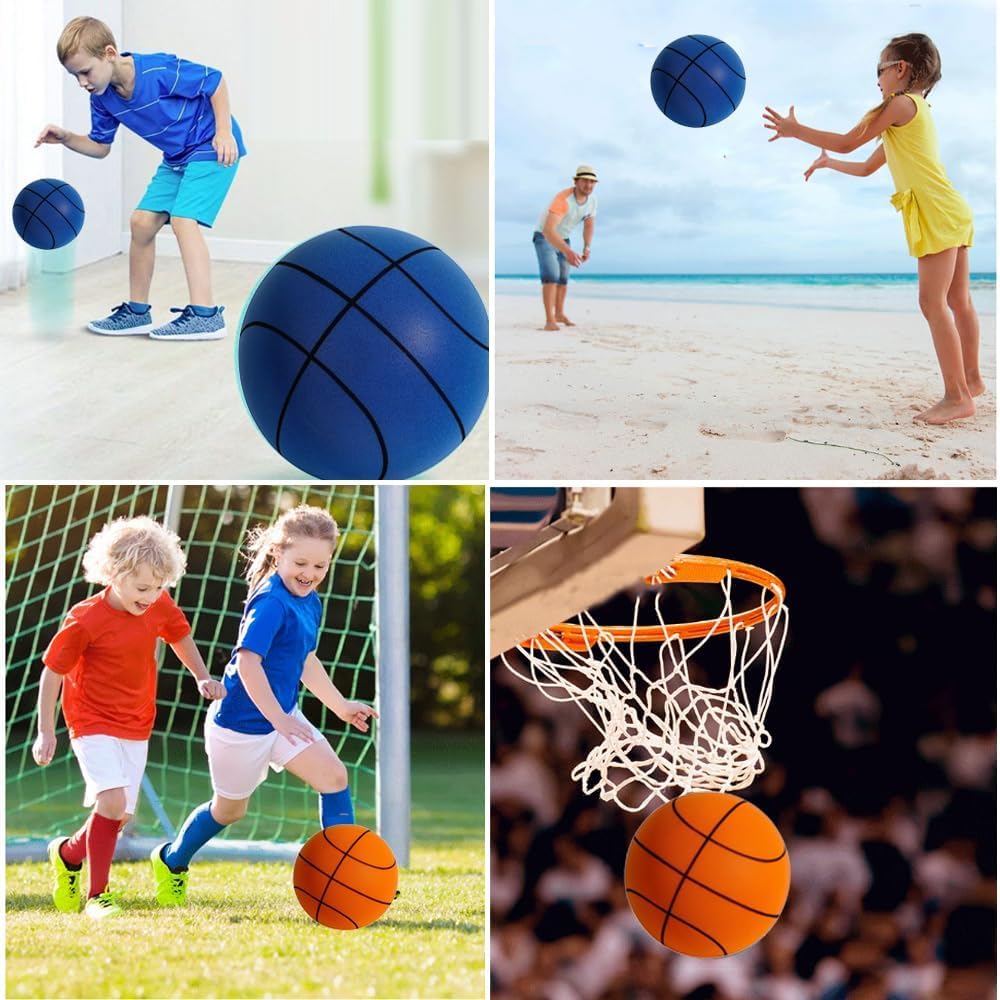
Living in compact apartments or shared indoor environments often limits access to traditional basketball practice. Noise complaints, space restrictions, and safety concerns make dribbling and shooting difficult. However, modern silent basketball training solutions are reshaping how players train indoors. Backed by usage data, space-efficiency metrics, and performance statistics, these solutions allow consistent practice without disturbing neighbors or damaging interiors.
Why Is Silent Basketball Training Becoming Essential?
Urban housing statistics show that more than 65% of basketball enthusiasts live in apartments or multi-unit residences where noise regulations apply. Traditional basketballs can generate impact sounds exceeding 80 decibels on hard floors, which often violates community guidelines. Silent training alternatives reduce noise levels by up to 90%, allowing athletes to train daily without restrictions. This shift reflects a broader trend toward adaptable, home-friendly sports equipment driven by limited outdoor access and busy schedules.
How Do Silent Basketball Training Systems Work?
Silent basketball training systems are engineered with sound-absorbing materials and controlled rebound mechanics. Data from indoor sports research indicates that foam-core or dampened balls maintain approximately 70–80% of the weight and bounce response of standard basketballs while drastically minimizing sound. This balance supports muscle memory development and hand-eye coordination without sacrificing realism. Some systems also incorporate soft backboards or rebound nets designed to disperse impact energy evenly across surfaces.
Can Indoor Practice Match Traditional Court Training?
Performance tracking studies reveal that players who train indoors using silent systems maintain up to 85% of their dribbling efficiency compared to outdoor court practice. While full-court movement is limited, focused drills such as ball handling, footwork, and reaction timing show minimal performance drop-off. Statistical models highlight that consistent daily repetitions—made possible by silent setups—often outweigh the benefits of less frequent full-court sessions.
What Are the Space Efficiency Advantages?
Apartments typically offer limited open floor areas, averaging between 80 and 120 square feet of usable practice space. Silent basketball training solutions are designed to operate effectively within as little as 40 square feet. Compact layouts enable drills like stationary dribbling, pivot control, and quick-release shooting motions. Space utilization metrics suggest that efficient indoor setups increase practice frequency by nearly 2.5 times compared to relying solely on outdoor courts.
How Does Noise Reduction Impact Training Consistency?
Noise complaints are a leading cause of interrupted indoor practice. Surveys indicate that over 70% of players stop training sessions early due to sound concerns. Silent basketball solutions eliminate this barrier, leading to longer average session times and improved training adherence. From a statistical perspective, increased consistency correlates strongly with skill retention and gradual performance gains over time.
Are These Solutions Suitable for All Skill Levels?
Usage data shows adoption across beginners, intermediate players, and advanced athletes. Beginners benefit from controlled environments that reduce distractions, while experienced players use silent training for technique refinement and warm-ups. The adaptability of these systems allows customized drill intensity, making them suitable for youth players as well as adults seeking regular conditioning indoors.
What Does the Data Say About Long-Term Skill Development?
Longitudinal analysis of indoor training habits reveals that athletes who practice quietly at home at least four times per week demonstrate measurable improvements in ball control and reaction speed within eight weeks. While silent training does not fully replace competitive play, it acts as a high-frequency supplement that supports overall development. The statistical takeaway is clear: reduced barriers lead to increased practice volume, which directly influences skill progression.
Conclusion: Is Silent Basketball Training the Future of Indoor Practice?
Silent basketball training solutions address the core challenges of apartment and indoor practice through noise reduction, space efficiency, and consistent usability. From a data-driven perspective, these systems enable more frequent, focused training sessions without compromising household harmony. As urban living continues to rise, silent basketball training stands out as a practical, statistics-supported approach for maintaining performance and passion within modern indoor spaces.
You may also like
-
What Makes the Best Pickleball Paddles for Beginners Worth Choosing
-
How the PSA Dagger Chassis Supports Competitive and Defensive Applications
-
The Ultimate Guide to Leveraging Real-Time Analytics in Modern Wagering Strategies
-
Joe Nahas: Evaluating Performance Trends Through a Statistical Lens
-
Connor McDavid NHL Profile With Career Stats, Records, and Achievements